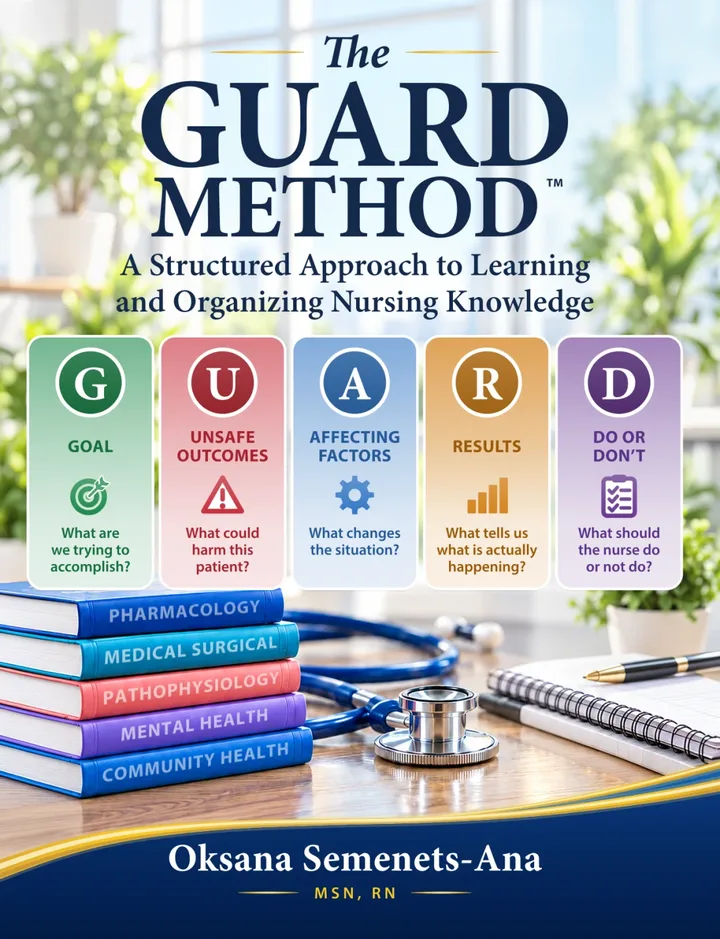
For nurse educators
Make reasoning visible.
Using the GUARD Method does not mean adding another lecture.
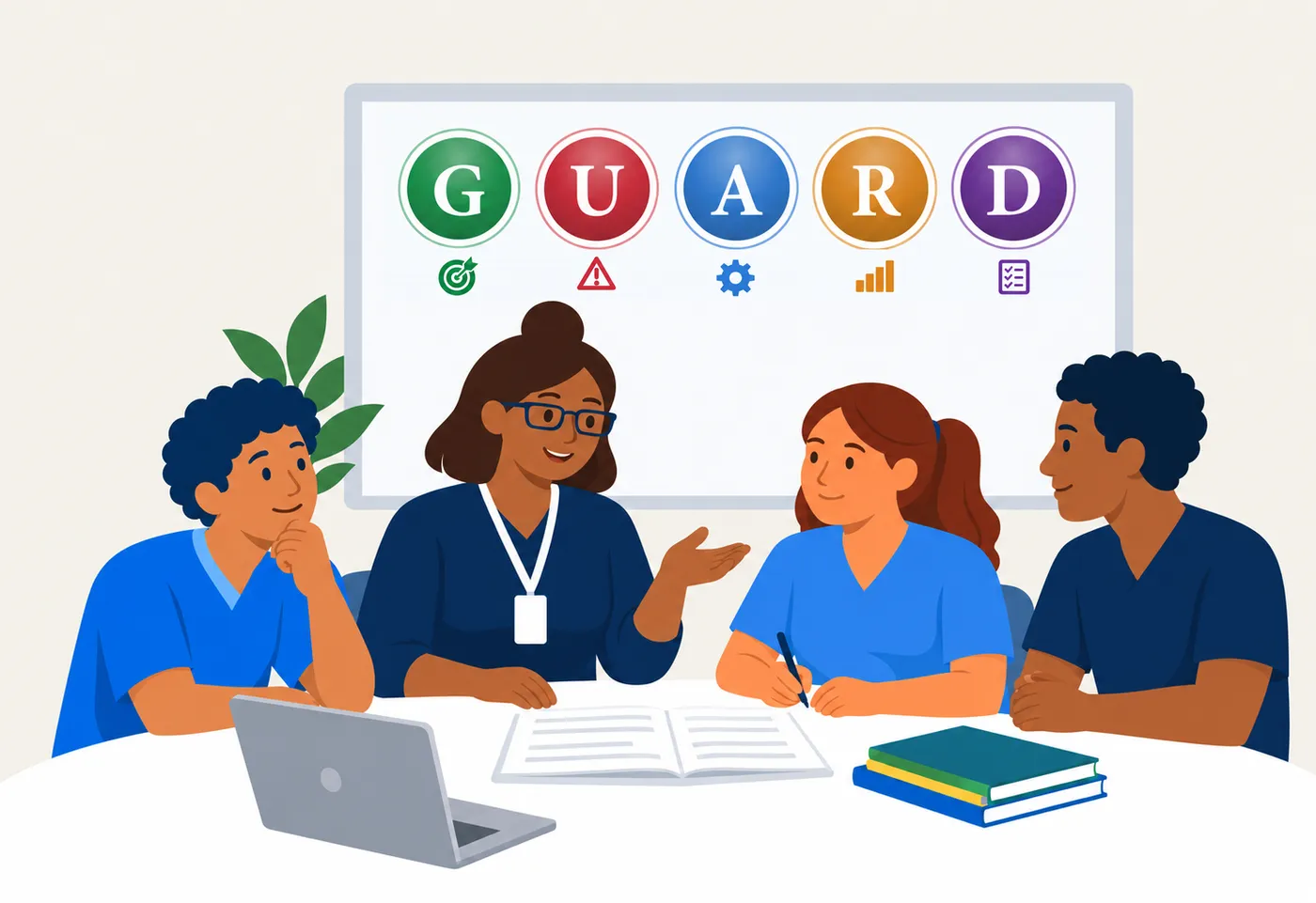
Five questions to return to
The content changes completely. The questions do not.

Goal
What are we trying to accomplish?

Unsafe Outcomes
What could harm this patient?

Affecting Factors
What changes the situation?

Results
What information tells us what is happening?

Do or Don’t
What should the nurse do or not do?
How to engage your students
Teach the medication as you always do. Then work through it with the five areas, and pause to ask one question.



Imagine teaching digoxin. The faculty member still teaches the medication.
“What is the Goal?”
Strengthen contraction in heart failure (not first-line) and control the rate in chronic atrial fibrillation, as ordered.
“What could become Unsafe?”
Toxicity: poor appetite, nausea, vomiting, blurred or yellow-green vision, confusion, a slow or newly irregular pulse, heart block and dangerous dysrhythmias.
“What is Affecting this situation?”
Low potassium (loop and thiazide diuretics), low magnesium, high calcium, kidney disease, older age and low body weight raise toxicity. Amiodarone raises the level.
“What Results matter?”
Apical pulse for a full minute and its rhythm compared with before; hold parameters; potassium, magnesium and kidney function.
“What should you do or not do?”
Below the ordered limit, or slower or more irregular than before: hold and ask. Toxicity signs or low potassium: do not give; notify now.
“What should you do or not do?”
Below the ordered limit, or slower or more irregular than before: hold and ask. Toxicity signs or low potassium: do not give; notify now.
“Which finding would make you concerned about giving the next dose?”
Then the faculty member pauses.
On furosemide and digoxin, a patient has nausea and yellow vision; potassium is 3.1 mEq/L; the apical pulse is 64 and newly irregular.
“Why?”
A student answers correctly.
“What would make you change your answer?”
One changed piece of information may change the entire answer.
Do not give the digoxin, even though 64 is above a common hold number; notify the provider at once and do not wait for a level.
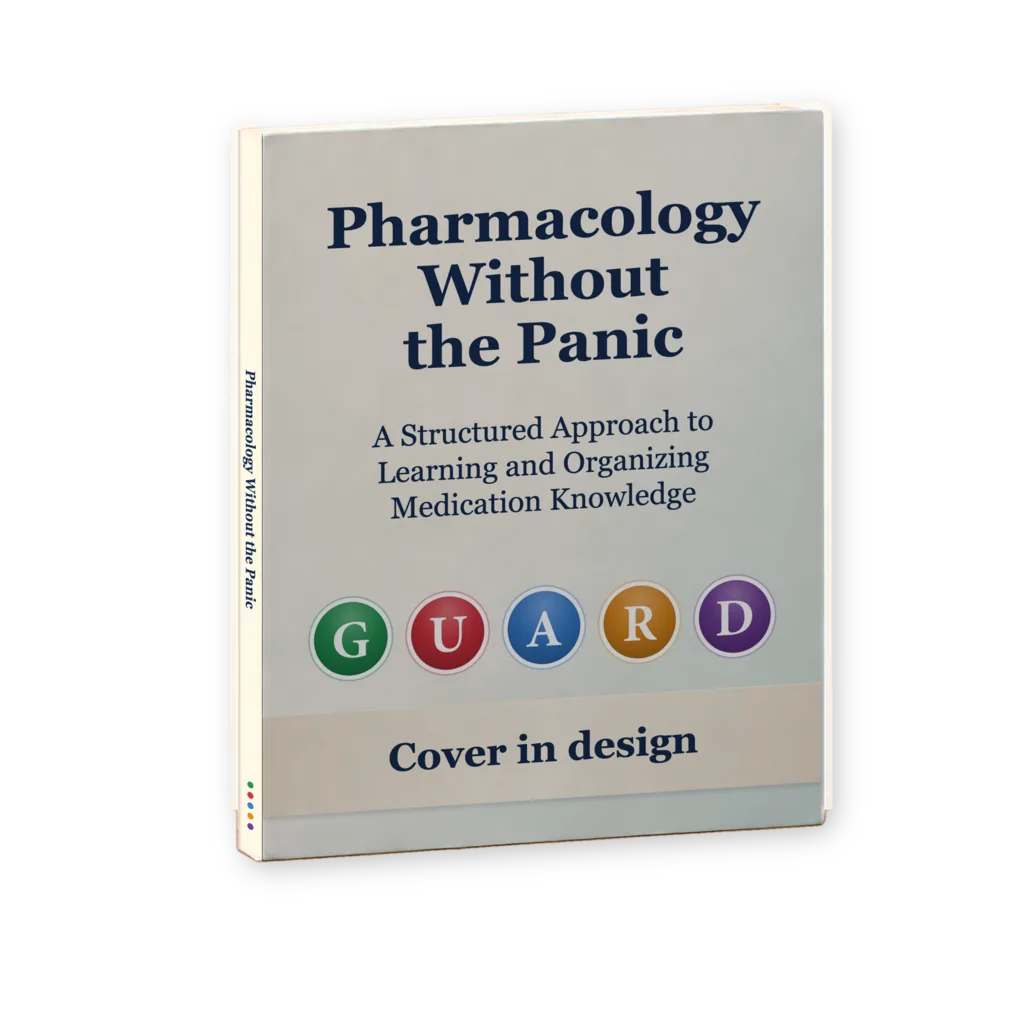
For your students
Pharmacology Without the Panic
A Structured Approach to Learning and Organizing Medication Knowledge
This book uses GUARD for medications. Each drug is organized with the same five questions, to help students connect the dots instead of memorizing lists.
See the book →From faculty questions to student thinking
At first, faculty may need to do most of the prompting.
What is the Goal?
What could become Unsafe?
What is Affecting this situation?
What Results matter?
What should you do or not do?
But I do not want the faculty member to remain the person asking those questions forever.
I want the student to begin asking them.
After a clinical day, a faculty member might ask:
- “What was your main Goal for this patient today?”
- “What concerned you most?”
- “What changed your plan?”
- “Which Result mattered most?”
- “What did you do, and what might you do differently next time?”