Meet the author
Oksana Semenets‑Ana, MSN, RN, CHEP
Nurse educator and academic leader
“I loved nursing, but I also loved that moment when a student suddenly understood something that had seemed impossible a few minutes earlier.”

At the center of her work is a simple belief: nursing education does not need to make nursing less complex. It needs to help students find a clearer way to organize the complexity.
Her work has included
She is a nurse educator and academic leader with more than a decade of experience in nursing education. Her professional work also includes involvement in nursing and higher education accreditation and evaluation.

Teaching
Prelicensure nursing programs

Mentoring
Students and new faculty

Leadership
Nursing education leadership

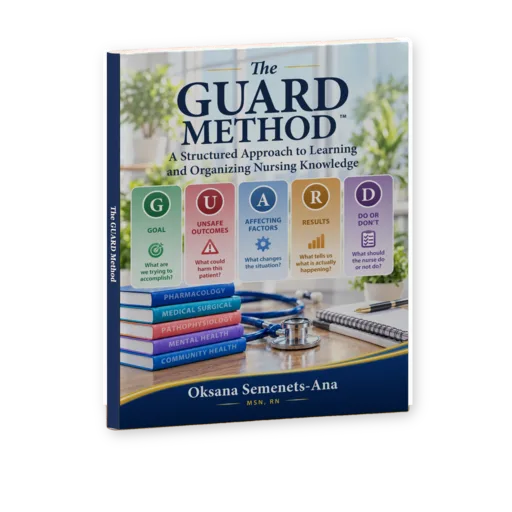
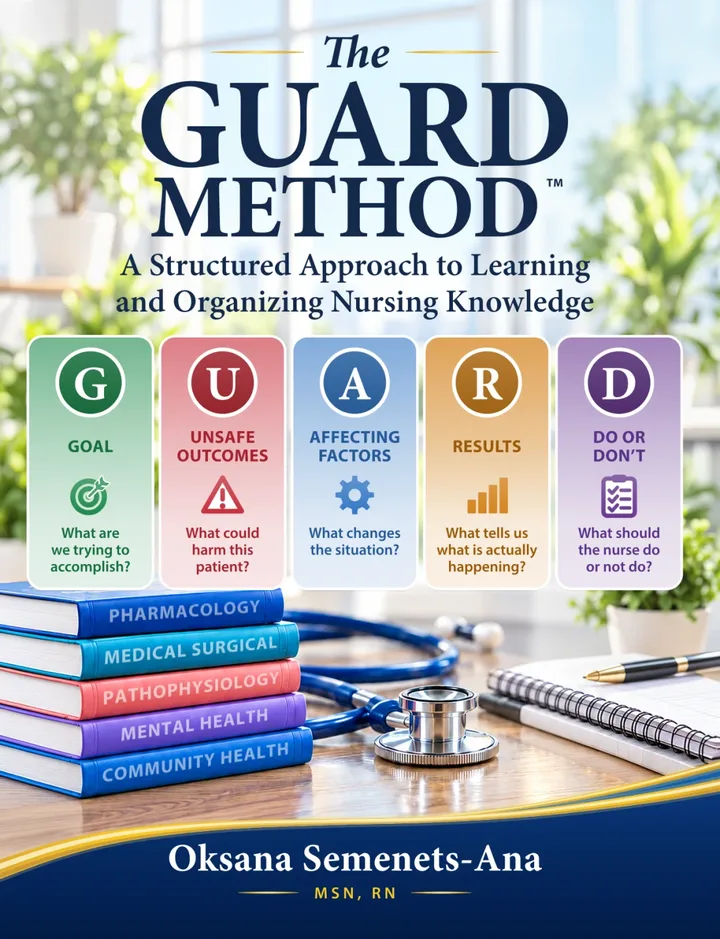
The GUARD Method grew from her work helping learners organize complex nursing knowledge.
“For me, the important point is simple. Organization matters when the volume of information is high.”
Inside the book
- A first worked example Linda Carter’s changing situation introduces the five areas and the connections between them.
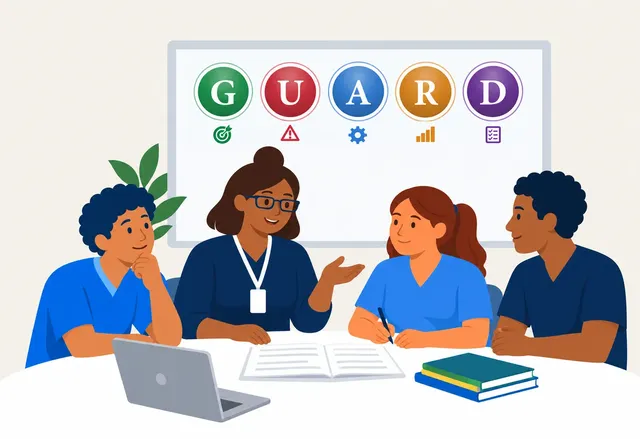
- Study and teaching activities Prompts for organizing a topic, explaining a connection, and reconsidering when a meaningful detail changes.
- Applications across nursing education Including pharmacology and case discussions.
- Illustrated practice pages and faculty examples Alongside guidance for using the faculty toolkit.